

Thickened toenails are a common complaint that we see in clinic. They can vary from being only slightly thickened (around 2–3 mm) to becoming extremely thick, sometimes reaching 1 cm or more.
The medical term for a thickened nail is onychauxis, which simply means an abnormally thickened nail. A gryphotic nail is a thickened nail that has become curved or distorted and grows at an angle, often giving it a claw-like appearance.
Why do nails become thickened.
There are many reasons why a nail may become thickened. The most common causes include repeated trauma from footwear or sporting activities, previous nail injuries, ageing, fungal nail infection, and certain skin conditions such as psoriasis. Sometimes several of these factors occur together, so a careful assessment is important before deciding on the most appropriate treatment.
A point of note, although fungal infections can contribute to nails thickening, not all thickened nails are fungal and not all fungal nails become thickened. This is a common misconception and is over generalized.
A podiatrist (chiropodist) can help you manage the condition and provide advice tailored to your individual needs. The first step is usually to assess the extent of the thickening and determine whether the nail is genuinely thickened or whether it is what we call a pseudo-thickened (false thickened) nail.
A pseudo-thickened nail occurs when the soft tissues, blood vessels and underlying structures beneath the nail become enlarged or grow upwards, creating the appearance of a very thick nail. Although the nail may appear to be around 1 cm thick, the nail plate itself may only be 3–4 mm thick in the centre. Attempting to reduce this type of nail with ordinary nail clippers can result in injury and bleeding, which is why it is important that it is assessed correctly.
One of the safest ways to manage a thickened nail is:
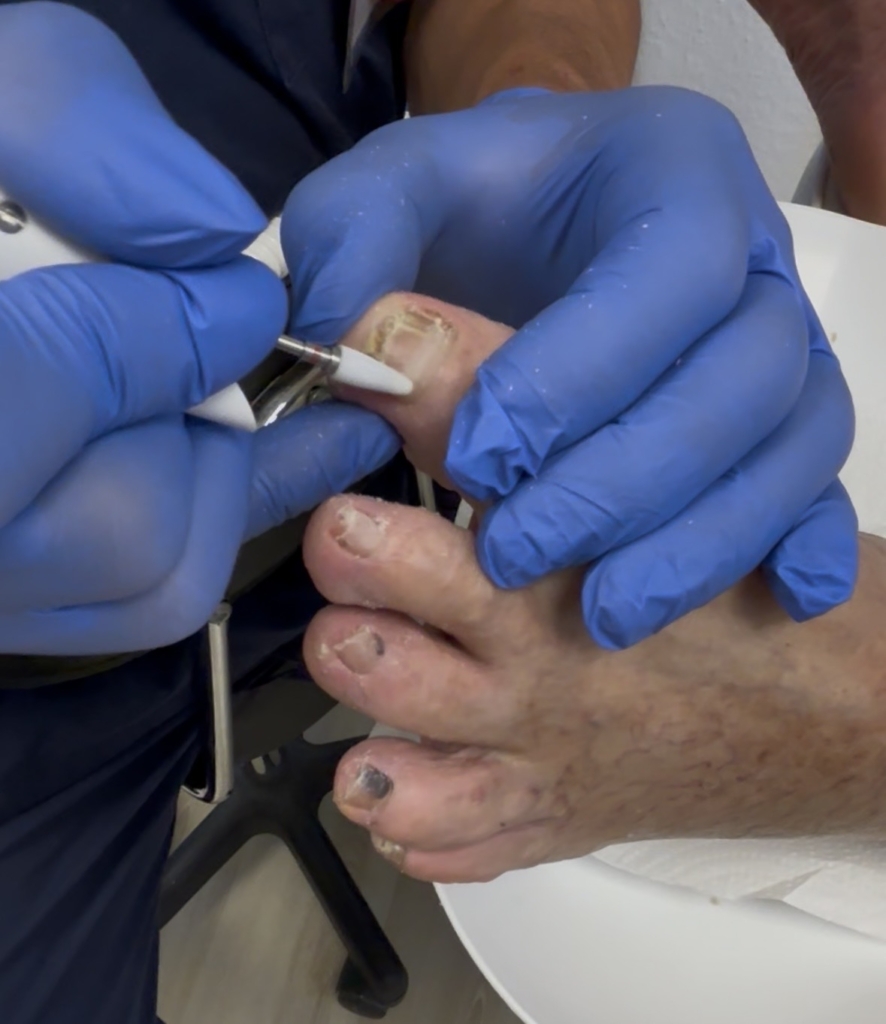
A thickened nail may press against the top of your shoe, creating constant pressure on the tissues beneath the nail. Over time, this can cause pain, bruising and, in some cases, breakdown of the skin, resulting in a wound or ulcer beneath the nail.
This is particularly important if you have diabetes, poor circulation, reduced sensation, a weakened immune system, or any other medical condition that places your feet at increased risk. Early assessment and regular care can help prevent complications.
For carers, care home staff and people with reduced sensation, regular foot checks are especially important. Some individuals may not realise that a thickened nail is repeatedly rubbing against the inside of a shoe or slipper until significant damage has already occurred.
Finally, for active people, thickened nails can simply be painful. If the nail is pressing against the end or top of your shoe during walking, running or hiking, discomfort is almost inevitable. In the worst-case scenario, a long, thickened nail can catch on footwear, flip-flops, sandals or bedding, leading to a painful partial or complete nail injury. Ouch!
Keeping thickened nails under control not only improves comfort but also helps reduce pressure, prevents complications and makes everyday activities much more enjoyable.
If you would like advice about a thickened nail, or simply wish to have your feet assessed by a qualified podiatrist, we would be pleased to help. Please get in touch to arrange an appointment and discuss the treatment options available.
Coastal Podiatry
Telephone: 07748 142169
Landline: 01202 748899
Email: info@coastalpodiatry.co.uk
Further reading.
https://www.healthline.com/health/onychauxis#is-it-contagious
Common nail changes and disorders in older people