

Summer is a wonderful time of year when our feet enjoy a little more freedom. We often wear sandals, flip-flops, or beach shoes, and spend more time barefoot, enjoying the feeling of grass beneath our feet, sand between our toes, or cooling our feet in the sea.
However, all this freedom can take its toll on your feet.
During the summer, our feet are exposed to constant changes in their environment—from warm to cold, salty to dry, grass to sand, pavements to bare feet. These changes can place extra stress on the skin and nails, making summer one of the most common times of year for foot problems to develop.
Looking after your feet during the summer plays an important role in maintaining good foot health. The skin is often the first area to suffer, followed by the nails. If you’re experiencing dry or cracked skin, hard skin, or sore areas on your feet, it may be time to give your feet the care they deserve so you can continue enjoying everything summer has to offer.
Your skin is the largest organ in your body. It acts as a protective barrier between the outside world and your body’s internal structures. During the summer months, the skin on your feet works particularly hard.
As a result, skin can become dry, hard skin (callus) can build up, heels may crack, and your feet can begin to feel tired or uncomfortable.
If this sounds familiar, a podiatry appointment can help restore the health and comfort of your feet while providing personalised advice to help prevent these problems from returning.
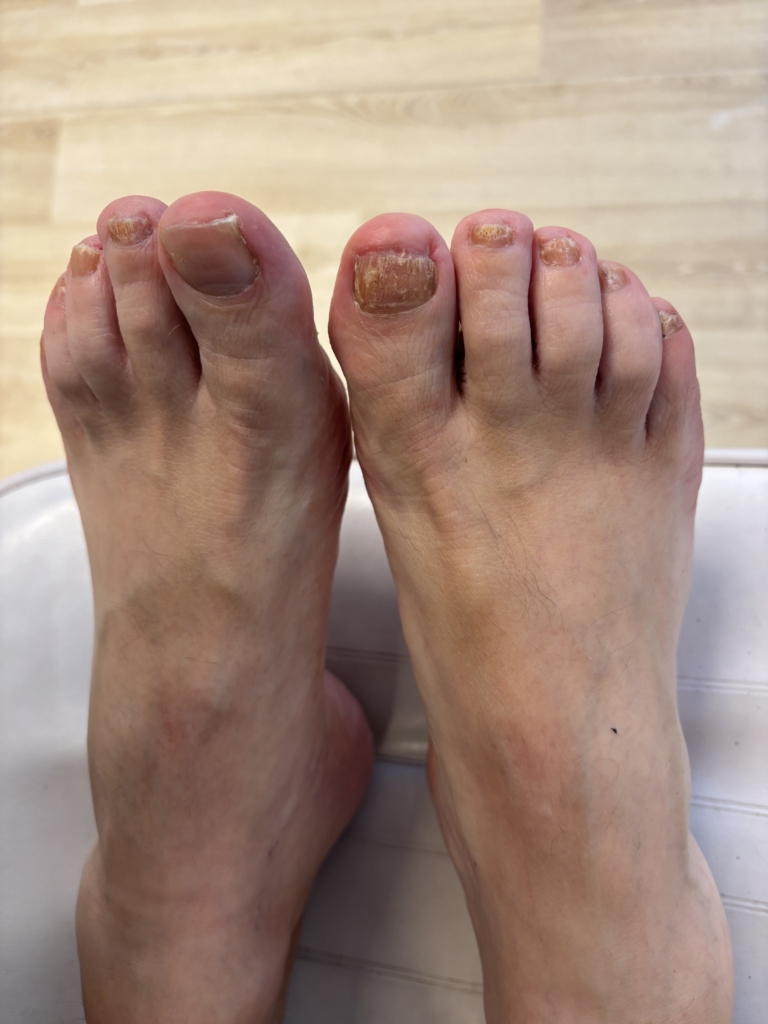
Post Fungal Nail reduction relieving discomfort and promoting restorative journey
Many people visit us during the summer with:
A podiatry treatment may include:
Foot fatigue is also a common complaint during the summer. Often, it is related to muscle overuse or footwear that does not provide adequate support. Assessing your footwear and foot function can make a significant difference, helping your feet remain comfortable throughout the day.
Simple steps can help keep your feet healthy throughout the season:

If you feel your feet would benefit from a podiatry consultation, we would be delighted to help.
At Coastal Podiatry, we provide comprehensive foot assessments, professional treatments, and personalised advice on foot health, skincare and footwear to help keep your feet comfortable throughout the summer and beyond.
We welcome new patients at our clinics in Sandbanks and Ashley Cross, Poole.
To book an appointment, please contact us:
Email: info@coastalpodiatry.co.uk
Mobile: 07748 142169
Telephone: 01202 748899
We look forward to helping you keep your feet healthy all year round.
https://rcpod.org.uk/common-foot-problems/corns-callus
https://www.nhs.uk/conditions/corns-and-calluses
https://www.pcds.org.uk/clinical-guidance/callosities-and-corns
And some good science behind Causes of Corns , treatment and management